
Articles | Published Articles
Bio fabrication of fibrotic liver microtissues as a scalable and drug responsive in vitro model

writer :
Fatemeh Majidi, Mahmoud Alipour Choshali, Amin Izadi, Mohammad Amin Hajari , Mona Saheli , Seyed Ali Ziai , Massoud Vosough, Abbas Piryaei

author :
-
.png)
Translator :
-

year of publication :

Publishers :
International Journal of Pharmaceutics
Abstract
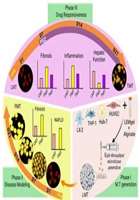
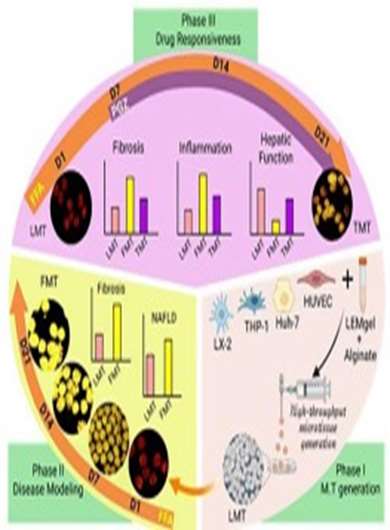
Around one-third of the global population is affected by chronic liver diseases which can eventually lead to liver fibrosis. Despite the widespread prevalence and severity of liver fibrosis, only one FDA-approved drug has been introduced so far, possibly due to the lack of a suitable model for pharmacological studies. Today, biomimetic in vitro models are more commonly used compared to in vivo models to avoid ethical concerns and physiological and genetic differences between animals and humans. An effective in vitro model should incorporate human cells, closely mimic in vivo conditions, be reproducible and scalable, and cost-effective. In this study, we developed liver microtissues consisting of available replacement for four major liver cell types encapsulated into a hydrogel containing liver extracellular matrix and alginate using a pneumatic system. To induce fibrosis, the microtissues were exposed to free fatty acids for 21 days. The successful fibrosis induction was confirmed through the evaluation of fibrotic markers at both the molecular and protein levels. To investigate the potential of the generated fibrotic microtissues (FMT) for pharmacological studies, Pioglitazone treatment was performed. Our findings indicated that in response to Pioglitazone, most of the evaluated fibrosis indices in the FMTs modulated and restored the range of control microtissues. Overall, it could be concluding that this model could be used for drug screening and could be a potential platform for precision medicine.
Keywords: Drug screening; Liver fibrosis; Liver microtissue; Oleic acid; Palmitic acid; Pioglitazone; Scalable in vitro model; Sodium alginate.